
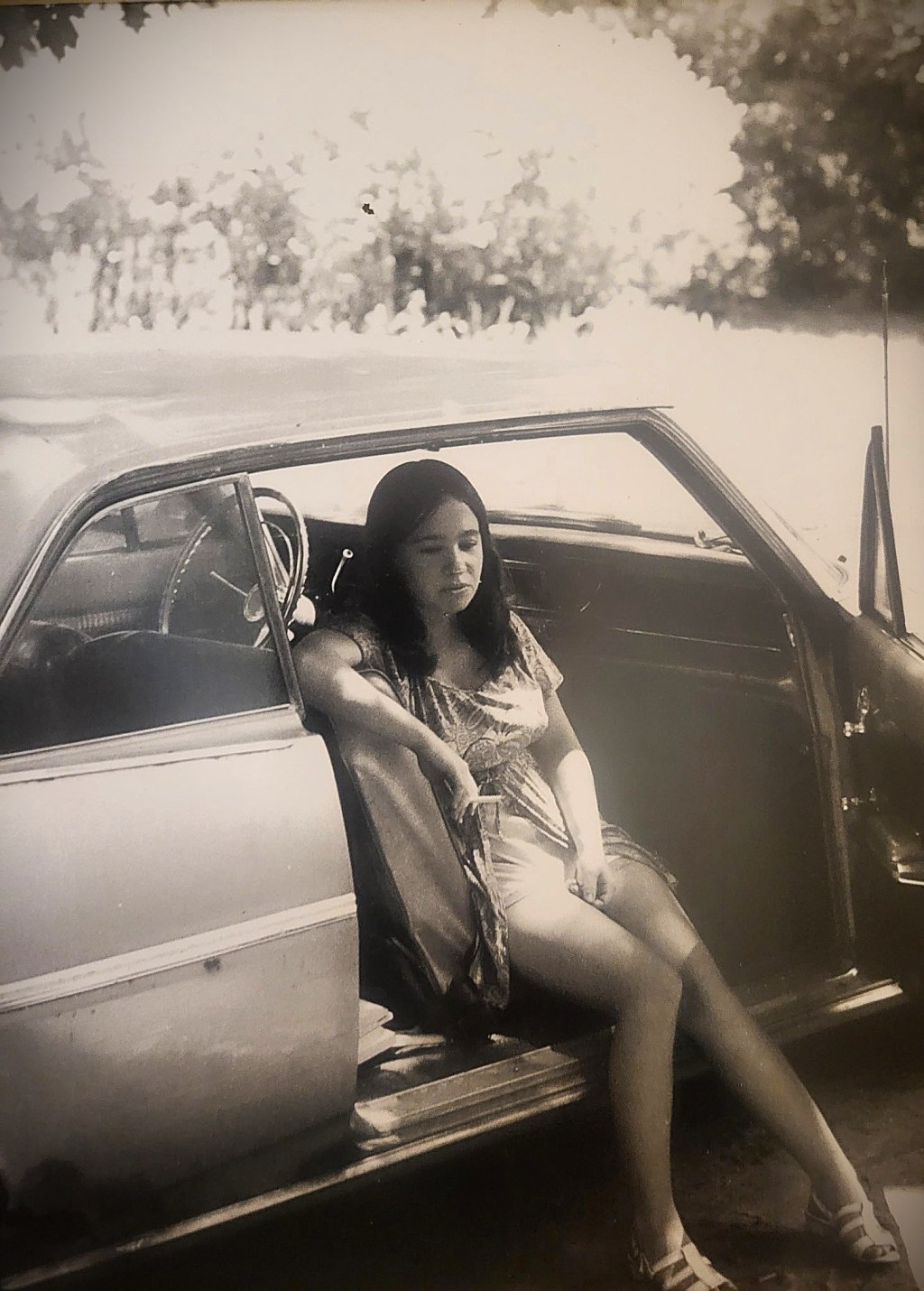
If you knew my mother Arlene you not only know her story; you lived it alongside her.
It has become folklore, really. It is the tale of a young woman who meets the love of her life in fifth grade and together they fight all adversity to raise four children—from Michigan to Illinois; from basement walls to farmhouse doors. It is a romantic, gut-wrenching tale of 16-year-old parents beating the odds.
But the life of a story isn’t in the outcome—the loving titles you receive as sister, wife, mother, grandmother, aunt, or friend; it is woven into the journey. It is in the pieces of the puzzle that few got to see. The subtle transformations that occurred over a lifetime of blood, sweat, and tears.
That is where the real beauty of my mother’s story takes form.
She was a girl born brave who didn’t realize her strength. Her childhood is a story of unrelenting survival and resiliency that had to be crafted at an age far earlier than it should have. Her hardship solidifies her character and she becomes a beautiful young woman starved to build a life of love she could finally call her own.
As a teenage mother, she was undoubtedly crushed by enormous pressures for her young family to thrive. And this is when she is faced with the most important lesson she ever learns. A lesson that transforms her way of life—which is you must make the most out of the least. Whether it is the groceries in your fridge or the time spent with your family.
My mom accepted the smallest of blessings with a grateful heart. She understood that a life of ease was not the one she was meant to travel, but the one condition she would not compromise on was having her dream of building a loving family.
Aside from her stature, there was no “small in life.” Arlene had big responsibilities, big emotions, big fears, and big feelings. And when life overwhelms you with big things, you do what makes sense to you. In her case, it was to make big dinners.
My mother once showed me the letters she wrote to her parents back home after moving away to Michigan at 16. Each letter included a lengthy description of the meals she cooked for my father.
Initially, when I read these, I found her infatuation with food nonsensical. Over time, I have come to realize what cooking meant to her. I think it can be summed up in a quote I found the other day that, if not given proper citation, I would have thought was written by my mother: “Food is symbolic of love when words are inadequate.”
This is what cooking did for my mother. It was a language that she could use when her feelings became too big and her fears too real. It was the little thing she could make the most of amidst the heaviness of her days.
Much of her young years as a mother were filled with worry as she and my father scraped by to provide for us. I imagine her desperation at times, praying her daily prayers with candles lit, pleading “God, give me the least of your blessings, and I will make the most of your love.”
His answer would eventually come in a journey back home to Illinois where a dilapidated farmhouse was waiting for her.
Finding the farm was “divine” intervention according to my parents. Its refurbishing put a spotlight on the husband that cared about nothing else than providing, and a mother that cared about nothing more than nourishing. It was a respite, a haven in the storm of life. It was the cornerstone in building some of the best chapters of our family legacy.
It would be followed by years of pig roasts, celebrations, and game nights filled with laughter. It was a full house with no furniture, watching the ’85 Bears. A door wide open and weekend dinners with friends and family.
It was late-night bonfires, making moon pies, and storm-watching summer evenings from the picnic table Dad made. And when the snow fell, it was “get your coat on if you’re playing upstairs,” and let’s hope to hell the electric blankets don’t catch fire. It was a house of simple things, small blessings that my mother tirelessly made the most of.
As all good things must come to an end, eventually, the farmhouse became a burden of upkeep, with empty rooms from college and career-bound kids. My dad knew it was time for a new chapter, as bulldozing the house began to look like a more practical option than all the paint, caulk, and plaster in the world.
My mother, however, swore she would be buried in the cornfields before she ever left. She had a flair for the dramatic, but as a mother now, I can understand the fear she wrestled with as she was leaving more than just a house. She had finally felt like she had built the life of love she worked so hard to create, and now her children were grown, and everything was changing.
With stronger spiritual muscles than those of the teenage mother she was decades ago, this time I imagine her confident request as she finally comes to accept this change in life. “God, give me the least of your blessings, and I will make the most of your love.”
When her heart met acceptance, her prayers led her to something small she could make the most of in a cozy duplex. It was where her chapters as a grandmother could flourish with giant sleepovers and pink fuzzy blankets, balloons on the floor, bleach in the kiddie pool, garlic bread on the stovetop (as well as stuffed into her grandson’s pocket), puddles for jumping, and swings for singing, “just singing on the swing.”
Those years disappeared before I could even appreciate they were here. This is where the story gets hard to tell.
Her time as a grandmother wasn’t long enough, and I would be lying to all of you if I didn’t admit how angry I felt at times as my mother’s condition put her on a rapid course of decline.
Gifts such as cooking became a vocation she had to forfeit as it became much too dangerous for her to operate the oven. Even if she wanted to, her ability to remember basic recipes escaped her.
As her speech was becoming significantly labored, I remember criticizing God, “How could you take away her only other form of communication—the feeding of those she loved?” It seemed cruel and unfair.
But when I find myself crawling toward anger, I light my candles and remind myself of how my mother lived.
God bless me with least of your blessings and I will make the most out of your love.
Without a morsel of her home cooking, like clockwork, my siblings and I showed up to help my dad care for her every weekend for almost four years. The old Sunday dinners of the past were replaced with loving conversations of fear, hope, love, and grace around my mother’s bed.
In her presence, we found solace in one another. As she endured the pain life had dealt her, she continued to nurture us in ways I will never be able to repay. The life of love she wanted to build was not on hold; it was simply taking a different form.
Her last days on this earth exemplified the very essence of who my mother was. She was a survivor to the end, possessing a will to fight for life that was never lost. Her tolerance for immense worldly pain was met with grace, acceptance, and resilience.
She chose the pain of her journey if it meant one more earthly minute with the family she so lovingly built. I have no doubt in my soul that during her final moments, she was a girl born brave who finally realized her strength.
And though her story has found its final chapter, I must insist that my mother’s legacy leaves you all with food for thought, as no one who comes to the Donnelly house leaves hungry.
What could each of us do if we had the faith to do the most with the least of what has been given to us?
May you travel through your days with angels around you. And when life gets tough and you feel surrounded by big things, think of Arlene, call upon your smallest blessings, fall to your knees, and say thank you.
Thank you for the opportunity to cultivate this seemingly small gift into profound, everlasting love.


Leave a Reply